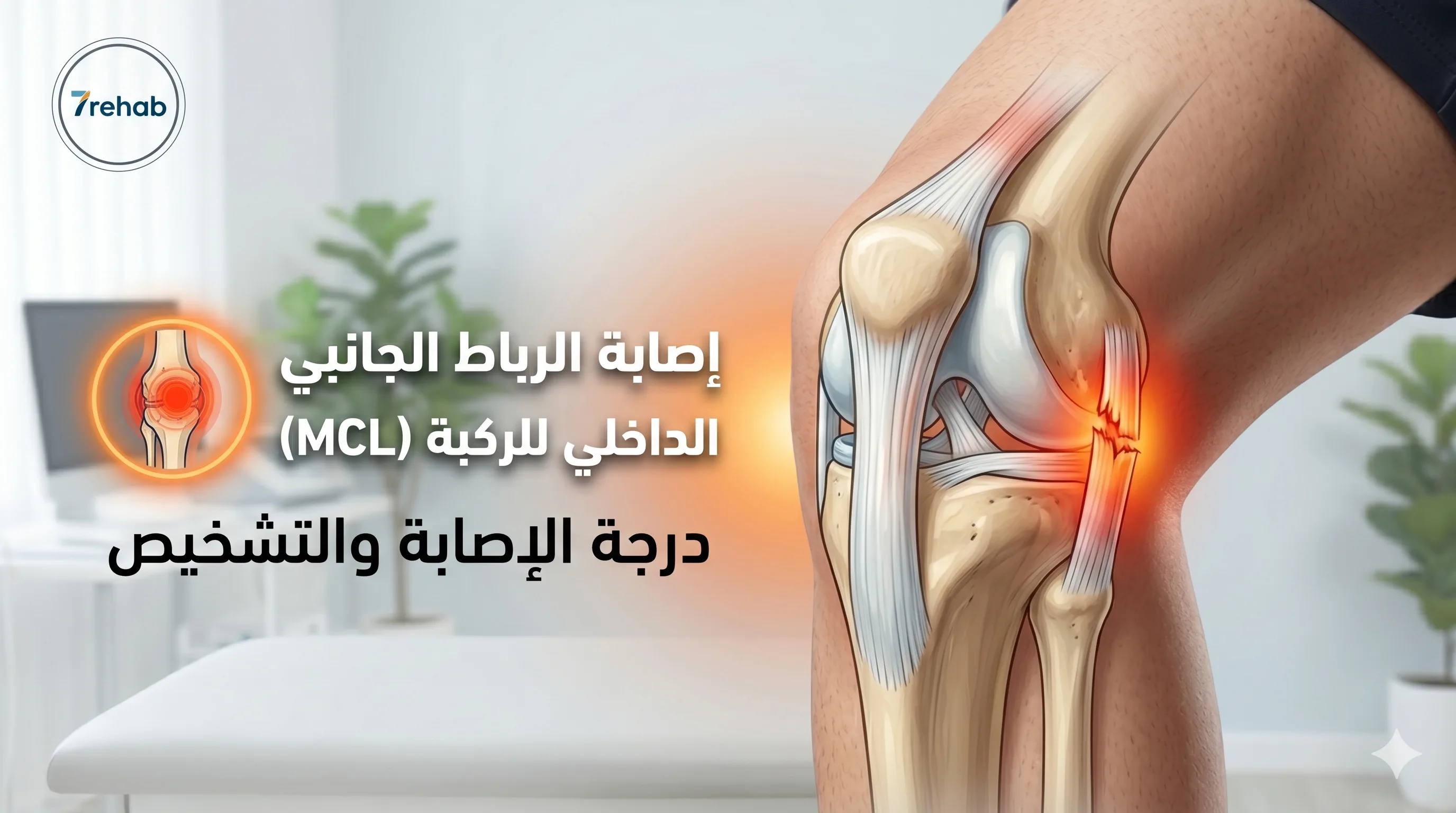
Did you take a hit to the outside of your knee and feel sharp pain on the inside? Do you feel your knee "giving way" after a sports injury? You may have a Medial Collateral Ligament (MCL) injury — one of the most common knee injuries among athletes. The good news: physical therapy is the optimal treatment in most cases, no surgery needed.
What Is the MCL?
The Medial Collateral Ligament (MCL) runs along the inside of your knee, connecting the thigh bone (femur) to the shin bone (tibia). It's one of four main ligaments that stabilize the knee, and its primary job is to prevent the knee from bending inward under pressure.
🔴 Experiencing a Knee Injury Now?
MCL injury symptoms:
- Pain on the inside of the knee — sharp or aching
- Swelling around the knee within hours of injury
- Difficulty or pain when fully straightening the knee
- Reduced range of motion
- Feeling of instability while walking or running (especially in higher grades)
- Possible associated injuries: ACL tear or medial meniscus damage
How Does It Happen?
- Direct blow to the outside of the knee — common in football, rugby, hockey
- Twisting the knee under body weight — during jumping, landing, or sudden direction changes
- Skiing — one of the top causes of MCL injuries
- Falls with the knee twisting inward
Injury Grades
Grade 1
Mild stretching of fibers — light pain, minimal swelling, intact knee stability. Recovery: 1-3 weeks.
Grade 2
Partial tear — moderate pain, clear swelling, some laxity. Recovery: 4-6 weeks.
Grade 3
Complete tear — severe pain, large swelling, clear instability. Recovery: 8-12 weeks.
Physical Therapy at Seven Rehab
In most cases (even Grade 3), the MCL is treated with physical therapy without surgery — unlike the ACL. Surgery is reserved for rare cases with multi-ligament injuries or professional athletes. Your physical therapist begins with a comprehensive assessment:
- Specialized clinical tests to grade the injury
- Knee stability and range of motion evaluation
- Muscle strength and balance measurement
- Review of injury mechanism and history
Pain & Inflammation Control
Cold packs, therapeutic laser, and ultrasound to reduce swelling and accelerate healing.
Manual Therapy
Specialized techniques to restore range of motion and safely mobilize the joint.
Kinesio Taping & E-Stim
Supports the ligament during healing and activates weakened muscles around the knee.
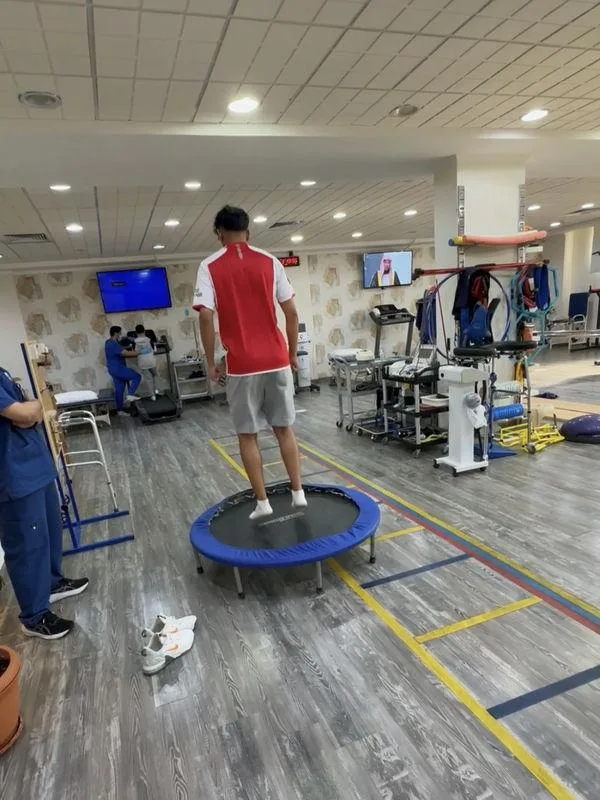
Progressive Strengthening & Balance
Custom exercises for quadriceps, hamstrings, and neuromuscular control before return to sport.
🟢 Prevention — For Athletes and Sports Enthusiasts
If you play football, basketball, ski, or any sport with fast direction changes, here are the essential MCL prevention tips:
1. Preventive Strengthening
- Quadriceps and hamstrings: balanced strength protects the knee
- Hip and glute muscles: prevent knee inward collapse while running
- Single-leg balance drills: improve neuromuscular control
2. Dynamic Warm-Up
- 10-15 minutes of dynamic warm-up before games
- Specific drills: leg swings, lunges, side shuffles
- Never start a match at full intensity cold
3. Proper Movement Technique
- Learn correct landing form: bend knees over toes
- Avoid knee rotation during sudden stops
- Wear sport-appropriate footwear
4. Respect Rest and Recovery
- Don't play when fatigued — most injuries happen in final minutes
- Address prior injuries before full return
- See a physical therapist at the first sign of persistent pain
Frequently Asked Questions
Does an MCL injury need surgery?
Very rarely. The MCL has excellent self-healing capacity due to its good blood supply. Even Grade 3 complete tears heal successfully with physical therapy in most cases. Surgery is reserved for multi-ligament injuries or chronic instability.
How long is recovery?
Depends on grade: Grade 1: 1-3 weeks, Grade 2: 4-6 weeks, Grade 3: 8-12 weeks. Full return to sport may take longer based on sport type and competitive level.
When can I return to sport?
Only after restoring full strength, normal range of motion, and stability, and passing functional tests (hop, balance, agility). Don't return to competition without therapist clearance. Book a return-to-sport assessment.
Do I need a knee brace?
Yes, for Grade 2 and 3 — typically for 2-6 weeks. A brace protects the ligament during healing while allowing safe motion. Your therapist will determine the right type and duration.
Can the injury come back?
Yes — if you return to sport before full recovery or skip the strengthening/prevention program. Complete rehabilitation is the key to avoid re-injury. Seven Rehab offers specialized return-to-sport programs.
How do I tell MCL from ACL injury?
Through clinical exam. MCL: clear medial pain. ACL: audible "pop" at injury and pronounced instability. Both can occur together. MRI confirms the diagnosis.
⚠️ علامات تستدعي تقييماً عاجلاً لإصابة MCL
- تورم سريع في الركبة خلال ساعات من الإصابة
- عدم القدرة على تحميل الوزن على الركبة المصابة
- إحساس بعدم ثبات الركبة أو "انفلاتها" أثناء المشي
- ألم شديد عند محاولة ثني أو فرد الركبة
مقالات ذات صلة
🩺 خطوتك القادمة
احجز جلسة تقييم مع أخصائي العلاج الطبيعي
بمركز سبعة — الرياض
✅ تقييم دقيق لحالتك
✅ خطة علاج مخصصة
✅ حجز فوري وسهل
احجز موعدك الآن عبر سبعان