هل تشعر بألم وتيبّس في الركبة عند الاستيقاظ أو بعد الجلوس الطويل؟ هل تسمع "فرقعة" عند ثني الركبة؟ قد تكون مصاباً بـخشونة الركبة (Osteoarthritis) — أكثر أمراض المفاصل شيوعاً بعد سن الأربعين. والخبر المطمئن: العلاج الطبيعي يحسّن الأعراض بشكل كبير ويؤخّر الحاجة للجراحة سنوات عديدة.
ما هي خشونة الركبة؟
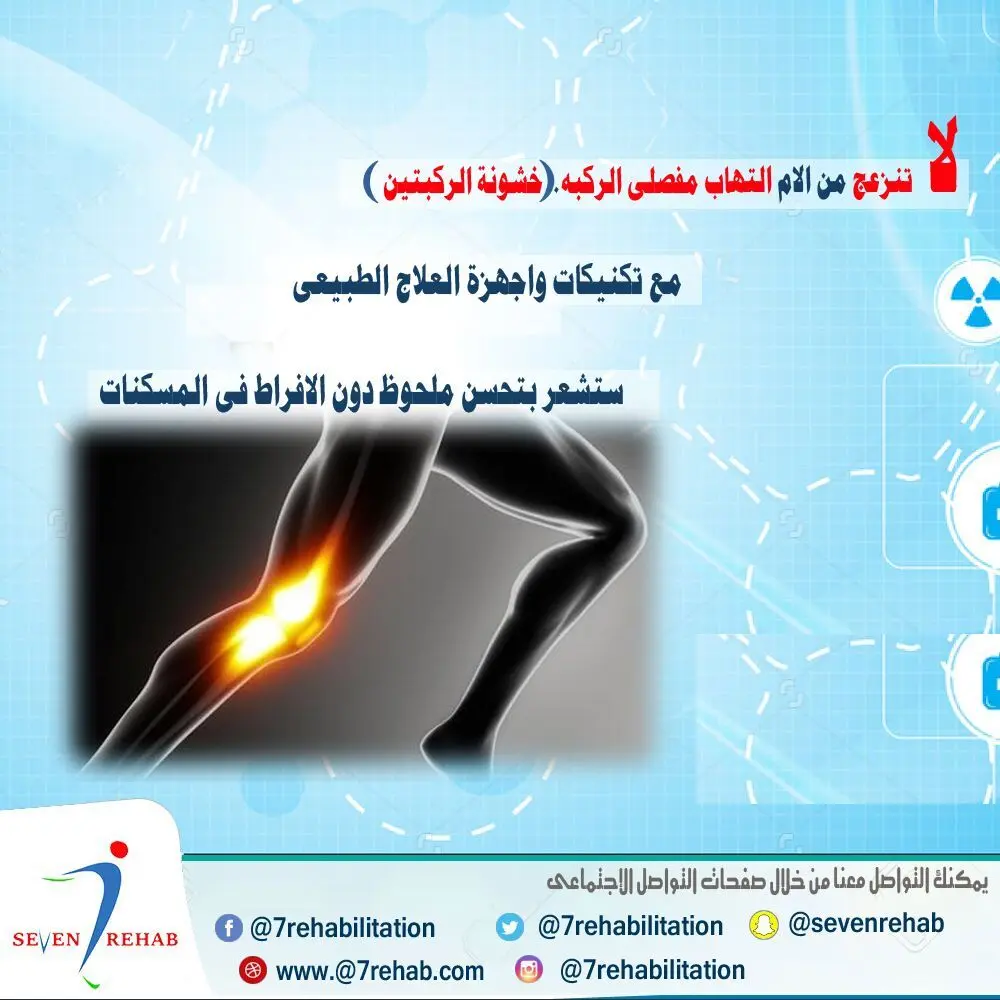
خشونة الركبة (Knee Osteoarthritis) هي تآكل تدريجي للغضروف الذي يغطي نهايات عظام المفصل. مع الزمن، يرقّ الغضروف وتبدأ العظام في الاحتكاك مباشرة ببعضها، مما يسبب الألم والالتهاب والتيبّس. قد يصاحبها نمو نتوءات عظمية (Osteophytes) وتغيّر في شكل المفصل.
🔴 تعاني من ألم الركبة الآن؟
أعراض خشونة الركبة:
- ألم يزداد مع الحركة ويقل مع الراحة
- تيبّس صباحي يستمر أقل من 30 دقيقة
- تيبّس بعد الجلوس الطويل يزول بعد الحركة
- صوت "فرقعة" أو طقطقة عند ثني الركبة
- صعوبة في صعود الدرج والنزول منه
- تورّم متقطع حول المفصل
- ضعف وضمور في عضلات الفخذ الأمامية
- في الحالات المتقدمة: تشوّه في شكل الركبة (اعوجاج للداخل أو الخارج)
عوامل الخطر
- العمر: الخطر يزيد بعد 45-50 سنة
- السمنة: كل كيلو زائد يضاعف الضغط على الركبة بمقدار 3-4 كيلو أثناء المشي
- الوراثة: تاريخ عائلي للخشونة
- إصابات سابقة: تمزق الغضروف الهلالي، قطع الرباط الصليبي، كسور حول المفصل
- الجنس: أكثر شيوعاً عند النساء خاصة بعد سن اليأس
- الإفراط في الاستخدام: وظائف تتطلب وقوفاً أو ركوعاً طويلاً
- ضعف العضلات: خاصة العضلة الرباعية الأمامية للفخذ
هل أحتاج لجراحة استبدال الركبة؟
في معظم الحالات: لا. جراحة استبدال المفصل محفوظة للحالات المتقدمة جداً مع فشل العلاج التحفظي. الأبحاث تؤكد أن العلاج الطبيعي + إنقاص الوزن + التمارين يمكنها تأخير الجراحة 10 سنوات أو أكثر، وفي كثير من الحالات تجنّبها تماماً.
العلاج الطبيعي في مركز سبعة
يبدأ أخصائي العلاج الطبيعي بتقييم شامل للمفصل، قوة العضلات، الاتزان، طريقة المشي، ومستوى الألم. ثم يضع برنامجاً متكاملاً:
تقليل الألم والالتهاب
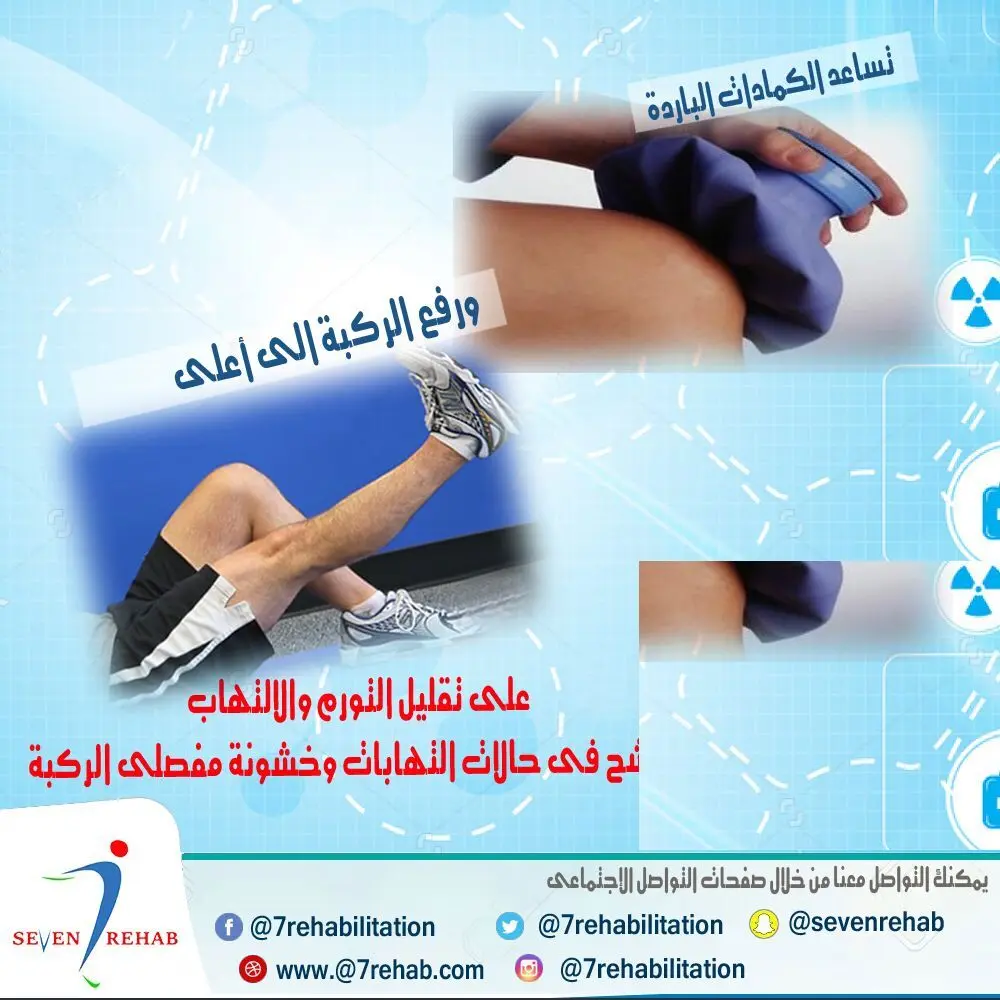
موجات فوق صوتية، ليزر علاجي، تنبيه كهربائي، وكمادات حرارية/باردة حسب الحاجة.
تحسين المدى الحركي
تمارين إطالة وعلاج يدوي لاستعادة مرونة المفصل وتقليل التيبّس.
تقوية العضلات
تمارين متدرجة للعضلة الرباعية والخلفية والورك — العضلات القوية هي أفضل دعم طبيعي للمفصل المتآكل.
الاتزان وتعديل المشي
تمارين لتحسين التوازن وتصحيح نمط المشي لتقليل الحمل على المفصل.
🟢 الوقاية — للحفاظ على صحة الركبة بعد الأربعين
لست مضطراً لانتظار الألم — هذه النصائح تحمي ركبتك وتؤخّر ظهور الخشونة:
1. الوزن الصحي هو الأهم
- إنقاص 5 كيلو فقط يقلل الضغط على الركبة بحوالي 20 كيلو مع كل خطوة
- الأبحاث تثبت أن إنقاص الوزن بمفرده يحسّن أعراض الخشونة بنسبة 30-50%
- حمية متوازنة غنية بالبروتين والخضروات والأوميغا 3
2. النشاط المنتظم بالنوع الصحيح
- مشي يومي 30 دقيقة — مفيد جداً للغضروف والمفصل
- سباحة ورياضات مائية — صفر حمل على الركبة
- دراجة ثابتة — ممتازة لتقوية العضلات دون إجهاد
- تجنّب: الجري الطويل على أسطح صلبة، القفز المتكرر، حمل الأثقال بوضعيات خاطئة
3. تقوية العضلات — الأهم لحماية المفصل
- Straight Leg Raise: استلقِ على الظهر، ارفع الرجل مستقيمة 30 سم، ثبّت 5 ثوانٍ. 3 مجموعات × 10 مرات
- Wall Sit: استند إلى الحائط واجلس كأنك على كرسي وهمي. ابدأ بـ10 ثوانٍ وزِد تدريجياً
- Clamshell: لتقوية عضلات الورك التي تدعم الركبة
- مرتان أسبوعياً تحدث فرقاً كبيراً
4. حماية يومية
- ارتدِ أحذية مريحة بدعم جيد للقوس
- استخدم عصا المشي (في اليد المقابلة للركبة المصابة) إذا نصح بها الأخصائي
- تجنّب القرفصاء العميقة والركوع الطويل
- دفّئ الركبة في الجو البارد
⚠️ أعراض خشونة الركبة التي تحتاج تدخلاً
- ألم مستمر أثناء الراحة وليس فقط عند الحركة
- تقوّس واضح في الساق يزداد مع الوقت
- تيبّس صباحي يستمر أكثر من 30 دقيقة
- صعوبة في صعود أو نزول الدرج أو القيام من الجلوس
الأسئلة الشائعة
هل خشونة الركبة تُشفى تماماً؟
الغضروف المتآكل لا يعود كما كان، لكن الأعراض يمكن السيطرة عليها بشكل ممتاز. معظم المرضى يعيشون حياة طبيعية بعد برنامج علاج طبيعي شامل. الهدف ليس "علاج التآكل" بل إيقاف التدهور وتحسين الوظيفة.
هل المشي يزيد الخشونة؟
على العكس تماماً. المشي المنتظم المعتدل يغذّي الغضروف ويقوي العضلات ويقلل التيبّس. الراحة الطويلة تضرّ المفصل. القاعدة: "الحركة دواء"، لكن تجنّب الجري الطويل والقفز.
متى أحتاج لجراحة استبدال الركبة؟
فقط عند: ألم شديد لا يستجيب للعلاج التحفظي، تقييد حركي شديد يؤثر على الحياة اليومية، فشل العلاج الطبيعي والأدوية وحقن المفصل بعد 6-12 شهراً. معظم المرضى لا يحتاجون للجراحة أبداً.
كم جلسة علاج طبيعي أحتاج؟
معظم المرضى يتحسنون خلال 12-20 جلسة على مدى 2-3 أشهر. بعدها، التمارين المنزلية المنتظمة هي مفتاح الاستمرار في التحسن. احجز تقييمك لمعرفة عدد الجلسات المناسبة لحالتك.
هل المكمّلات (الجلوكوزامين والكوندرويتين) مفيدة؟
الأبحاث متضاربة. بعض المرضى يشعرون بتحسن، وبعضهم لا. لا تعوّض عن العلاج الطبيعي والتمارين. استشر طبيبك قبل تناول أي مكمّل.
هل حقن المفصل (كورتيزون، هيالورونيك) فعّالة؟
قد تساعد في تقليل الألم مؤقتاً (أسابيع إلى أشهر)، لكنها ليست علاجاً شافياً. تُستخدم كجزء من خطة شاملة تشمل العلاج الطبيعي والتمارين. الكورتيزون له حدود في عدد المرات الآمنة.
مقالات ذات صلة
🩺 خطوتك القادمة
احجز جلسة تقييم مع أخصائي العلاج الطبيعي
بمركز سبعة — الرياض
✅ تقييم دقيق لحالتك
✅ خطة علاج مخصصة
✅ حجز فوري وسهل
احجز موعدك الآن عبر سبعان